Water Extraction & Structural Drying in Kenosha, WI
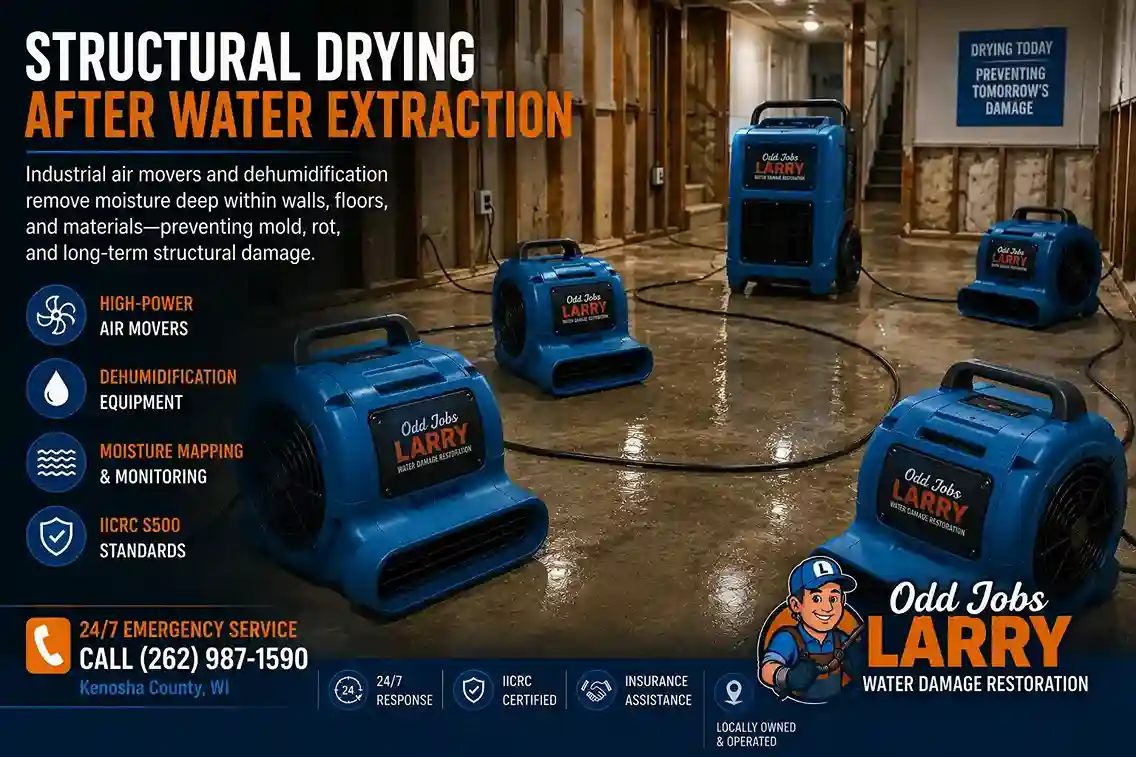
Standing water is only part of the problem. Hidden moisture trapped inside walls, floors, insulation, and structural materials can cause mold growth and long-term damage. Our team provides emergency water extraction, moisture mapping, commercial dehumidification, and professional structural drying throughout Kenosha County.
 Live moisture monitoring in progress
What Is Water Extraction and Structural Drying?
Water extraction removes standing water from a property using truck-mounted or portable pumps and extraction wands. Structural drying is the process that follows: removing the hidden moisture that remains inside drywall, framing, subfloors, and insulation even after surface water is gone. Because materials can look dry while still holding damaging moisture, technicians rely on moisture mapping and thermal imaging to find trapped water, then apply commercial dehumidification and directed airflow until every material reaches a safe, documented moisture content.
Why Fast Water Removal Matters
Hidden moisture can remain inside building materials even when surfaces appear completely dry. Proper drying targets the moisture inside walls and floors, not just what's visible on top.
Mold Growth
Mold colonization can begin within 24–48 hours of water exposure, and it thrives inside wet drywall and insulation long before it's visible.
Structural Deterioration
Framing, subfloors, and joists absorb moisture over time, weakening the structure and leading to costly rot and warping.
Flooring Damage
Hardwood cupping, laminate swelling, and carpet delamination all accelerate the longer moisture sits untreated.
Insulation Failure
Wet insulation loses its R-value and becomes a long-term moisture reservoir hidden behind drywall.
Drywall Failure
Saturated drywall loses structural integrity and can crumble, requiring full replacement instead of drying.
Secondary Damage
Untreated moisture migrates to unaffected areas, expanding the scope, cost, and timeline of the restoration job.
Emergency Water Extraction Services
Rapid extraction reduces the amount of water absorbed into drywall, subfloors, and framing, shortening dry time and lowering the risk of mold and secondary damage.
Flood Water Removal
Fast extraction after storm flooding to limit how much water soaks into building materials.
Basement Water Extraction
Full extraction and drying for finished and unfinished Kenosha basements.
Burst Pipe Water Removal
Emergency extraction after frozen or burst supply lines flood a structure.
Appliance Leak Cleanup
Extraction for washer, dishwasher, water heater, and ice-maker line leaks.
Storm Water Extraction
Lake Michigan-driven downpours call for fast, coordinated extraction crews.
Commercial Water Removal
Extraction scaled for retail, office, and warehouse properties across Kenosha.
Professional Structural Drying Services
Structural drying is a science-based process that uses extraction, airflow, dehumidification, and moisture monitoring to return every material to an acceptable, documented moisture content, not just a dry appearance.
Drywall Drying
Directed airflow and controlled humidity dry drywall in place whenever the material can be saved.
Subfloor Drying
Under-floor air movement targets moisture trapped beneath finished flooring.
Hardwood Floor Drying
Specialized mats and controlled drying curves prevent further cupping or warping.
Framing Drying
Structural framing is monitored and dried to prevent long-term rot and weakening.
Crawl Space Drying
Ventilation and dehumidification address Kenosha's common crawl-space moisture issues.
Ceiling Cavity Drying
Targeted airflow dries moisture trapped above ceilings after roof or upper-floor leaks.
Hidden Moisture Detection & Moisture Mapping
Water often migrates behind walls and beneath flooring where it can't be seen. Our moisture mapping process combines thermal imaging with direct moisture-meter readings to trace exactly how far water traveled before any drying equipment is placed.
The IICRC restoration framework calls for inspection, moisture mapping, extraction, drying, and documentation as core, sequential steps, not optional add-ons.
Thermal Imaging
Infrared cameras reveal temperature differences that indicate trapped moisture.
Moisture Meters
Pin and pinless meters quantify moisture content inside materials.
Infrared Inspection
Full infrared sweeps of walls, ceilings, and floors before equipment placement.
Wall Cavity Detection
Locating moisture inside wall cavities without unnecessary demolition.
Understanding Water Damage Categories
Water damage restoration standards classify water by contamination level, and each category requires different handling, PPE, and disposal procedures.
Category 1 Water
Clean water from a source like a supply-line break. Lowest contamination risk, fastest extraction and drying timeline.
Category 2 Water
Gray water containing some contamination, such as appliance overflow. Requires antimicrobial treatment during drying.
Category 3 Water
Black water, including sewage and floodwater. Classified as biohazard water and handled under strict IICRC S500 protocols.
From First Call to Final Dry Verification
Every job is documented with thermal imaging, moisture meter readings, air mover placement, and drying logs that satisfy IICRC S500 documentation standards.
Emergency Response
Live crew dispatched 24/7.
Inspection & Moisture Mapping
Thermal imaging locates hidden water.
Water Extraction
Standing water removed on arrival.
Equipment Setup
Air movers and dehumidifiers placed.
Structural Drying
Materials dried to target moisture content.
Daily Moisture Monitoring
Readings logged until goals are met.
Final Dry Verification
Documented sign-off for your records.
Prevent Mold Growth Through Proper Drying
Mold can begin colonizing wet drywall and insulation within a 24–48 hour window of water exposure. Hidden moisture left behind walls or under flooring is one of the most common causes of mold growth after a water damage event, along with reduced indoor air quality throughout the home.
Complete structural drying, verified with moisture readings rather than a visual check, is the most reliable way to prevent mold from taking hold in the first place.
What Puts a Home at Risk
- Wet drywall left undried behind furniture
- Saturated insulation inside wall cavities
- Hidden moisture under baseboards and flooring
- Poor ventilation slowing natural evaporation
- Declining indoor air quality from trapped humidity
Insurance Documentation for Water Extraction Services
Every extraction and drying job includes the paper trail your claim needs: moisture readings, drying logs, Xactimate estimates, and direct adjuster coordination.
What's typically covered, and what needs a separate rider.
What Kenosha homeowners should know before choosing.
Commercial Water Extraction & Drying Services
We scale extraction and structural drying equipment for retail properties, offices, warehouses, restaurants, and property management companies across Kenosha, minimizing downtime while materials dry to verified moisture levels.
Every Cause of Water Damage We Handle
Water Damage Guides for Kenosha Homeowners
Why Kenosha Homes Need Fast Extraction and Drying
Lake Michigan humidity and lake-effect precipitation, spring-thaw sump failures, and housing stock built largely between the 1920s and 1970s all raise the stakes for how quickly extraction and drying need to happen after water enters a Kenosha home.
Water Extraction & Structural Drying Questions, Answered
How long does structural drying take?
Most residential structural drying takes 3–5 days, though it can extend beyond that for Category 3 water, larger affected areas, or slower-drying materials like hardwood and plaster.
What is the difference between water extraction and structural drying?
Water extraction removes standing water on the surface. Structural drying is the follow-up process that removes hidden moisture from inside walls, floors, and framing using air movers and dehumidifiers.
Can walls dry on their own after water damage?
Rarely to a safe level. Without directed airflow and dehumidification, moisture inside drywall and insulation can linger for weeks, creating ideal conditions for mold growth.
How do professionals detect hidden moisture?
Technicians use thermal imaging and moisture meters to map moisture behind walls, under flooring, and inside framing before placing any drying equipment.
How much does water extraction cost in Kenosha?
Costs depend on water category and square footage affected. Most Kenosha extraction and drying jobs fall within the same $1,000–$8,000+ range as full restoration, and we provide a written estimate before starting.
Can structural drying prevent mold growth?
Yes. Since mold can begin colonizing within 24–48 hours of water exposure, fast, verified structural drying is the most effective way to prevent it from taking hold.
What equipment is used for water extraction?
Truck-mounted and portable extraction units remove standing water, followed by air movers, LGR dehumidifiers, and moisture monitoring equipment during the drying phase.
Do insurance policies cover water extraction services?
Sudden events like a burst pipe are typically covered, while gradual leaks and sewer backup often require a separate rider. We document extraction and drying work to support your claim either way.