When a sump pump fails during heavy rain, spring thaw, or power outages, basement flooding can happen fast. Our team provides emergency water extraction, structural drying, mold prevention, and complete restoration services throughout Kenosha County.
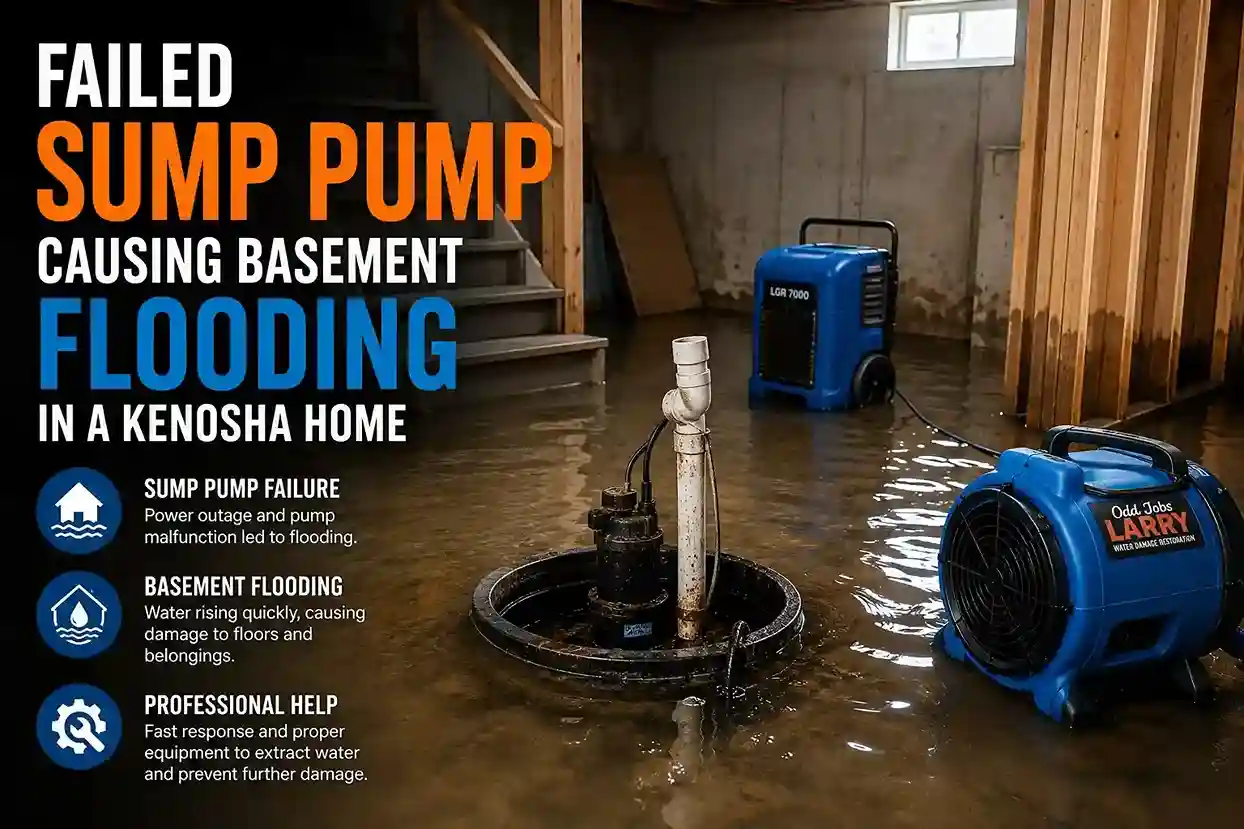
If your sump pump fails, shut off power to the pit if standing water is near electrical components, then begin removing water immediately with a wet vac or by bucket if needed. Sump pumps typically fail from power outages, motor burnout, clogged discharge lines, or heavy rainfall that overwhelms pump capacity. Call a restoration company right away. Mold can begin growing within 24-48 hours of standing water, so fast extraction and drying matters more than almost anything else.
Kenosha's location on Lake Michigan means the ground stays saturated with moisture for much of the year, and heavy thunderstorms can drop inches of rain in a matter of hours. Add in spring snowmelt, which sends a sudden surge of groundwater toward foundations every year, and it's easy to see why sump pumps here work harder than almost anywhere else in the state.
Kenosha's housing stock, much of it built between the 1920s and 1970s, adds another layer of risk: aging foundations are more prone to seepage, older sump systems often lack modern battery backups, and high groundwater tables in low-lying areas near the lakefront put constant pressure on basement walls and floors.
A sump pump is only rated to move a certain volume of water per hour. When inflow from heavy rainfall or snowmelt exceeds that capacity, or when water finds another path into the basement entirely (through a foundation crack, window well, or floor drain), flooding happens even with a fully functional pump. We respond to sump pump failures and basement flooding throughout Kenosha and the surrounding zip codes:
Understanding why sump pumps fail is the first step toward preventing the next flood.
Battery backup missing. A pump can't run without power, and storms are the most common cause of both flooding and outages at the same time.
Motor burnout from age or overuse leaves the system unable to move water even when power is available.
Pump never activates. A stuck or misaligned float switch means the pump doesn't know water has entered the pit.
Water cannot exit the home. Debris, sediment, or a nesting animal can block the line even when the pump itself works fine.
Common during Wisconsin winters, a frozen discharge line backs water up into the pit with nowhere to go.
Pump overwhelmed by incoming water when rainfall volume exceeds what a single pump can handle.
A clear, six-step process from emergency call to full restoration.
A live technician dispatches a crew to your Kenosha home as soon as you call, day or night.
We map moisture with thermal imaging and identify the water category before any equipment is unloaded.
Standing water is removed with truck-mounted and portable extraction equipment.
Commercial dehumidifiers and air movers dry framing, subfloor, and drywall to safe moisture levels.
Antimicrobial treatment addresses contamination risk and helps prevent mold growth.
Damaged materials are repaired or replaced, returning your basement to pre-loss condition.
Not all basement water is the same, and how we dry it depends on its source. We classify every job according to IICRC S500 standards, the industry reference for water damage restoration, and take moisture readings throughout the process to confirm the structure is actually dry, not just visibly dry.
Clean water from a sump pump or supply line, the least contaminated but still capable of causing mold if not dried quickly.
Grey water with some contamination, such as water that's been sitting or has picked up materials from flooring or furniture.
Grossly contaminated water, including groundwater or anything mixed with sewage, requiring stricter containment and disposal.
Our process includes drywall drying, subfloor drying, and hidden moisture detection behind walls and under flooring, since moisture that isn't fully addressed becomes the source of mold and structural problems weeks later.
Wet drywall, wet insulation, and soaked carpet are all ideal conditions for mold, and colonization can start in as little as a day or two after a sump pump failure. Musty odors are often the first sign that hidden moisture is trapped somewhere it can't be seen.
If your basement has flooded and you're noticing a persistent musty smell even after the visible water is gone, it's worth a closer look. Our mold remediation after water damage team can inspect for hidden moisture and stop growth before it spreads further into the structure.
Basement flooding coverage depends heavily on the source of the water. A sudden sump pump failure is often covered under a standard homeowners policy, while flooding caused by sewer backup or surface water typically requires a separate sewer backup rider, an add-on many Kenosha policies don't include by default.
Not sure where your policy stands, or what to do before the adjuster shows up? These guides walk through it in detail:
Homeowners in local Kenosha forums and community groups consistently point to the same lesson after a flood: fixing drainage and grading problems outside the home matters just as much as the pump itself.
"Our sump pump failed during the spring thaw and flooded the basement on a Sunday night. Crew was at our Southport house within the hour."
"Power went out during a storm and our backup battery had died without us knowing. They explained everything and helped us file the claim."
A working sump pump can still be overwhelmed by heavy rainfall or snowmelt that exceeds its capacity, or water can enter through a different pathway entirely, such as a foundation crack or window well.
Most basement flood cleanups in Kenosha range from $1,000 to $8,000+ depending on the water category and how much of the basement was affected. We provide a written estimate before any work begins.
Yes. Mold can begin colonizing within 24 to 48 hours of standing water, which is why fast extraction and thorough drying is the priority in every basement flood we respond to.
Often yes for sudden mechanical failure, though coverage varies by policy. Sewer backup and some groundwater-related flooding may require a separate rider. We help document the loss either way.
Most basements take 3 to 5 days to fully dry with commercial dehumidifiers and air movers running continuously, though larger or more heavily saturated spaces can take longer.
If the pump failed due to motor burnout or age, replacement is usually recommended. If the failure was due to power loss or an overwhelmed system, adding a battery backup may be enough.
Musty odors, bubbling or discolored paint, soft spots in flooring, and unexplained humidity are all signs that moisture may be trapped somewhere you can't see.
If your basement is finished or holds anything of value, a battery backup is strongly recommended. Power outages during storms are one of the most common causes of basement flooding in Kenosha.
Live technicians answer 24/7, every day of the year, across Kenosha, WI.
📞 Call (262) 205-8618 Now