
Sewage Backup Cleanup & Category 3 Water Restoration in Kenosha, WI
Raw sewage backups require immediate professional cleanup. Our team provides 24 hour sewage cleanup with Category 3 black water removal, biohazard sanitation, structural drying, odor removal, and complete sewage water damage restoration throughout Kenosha County.
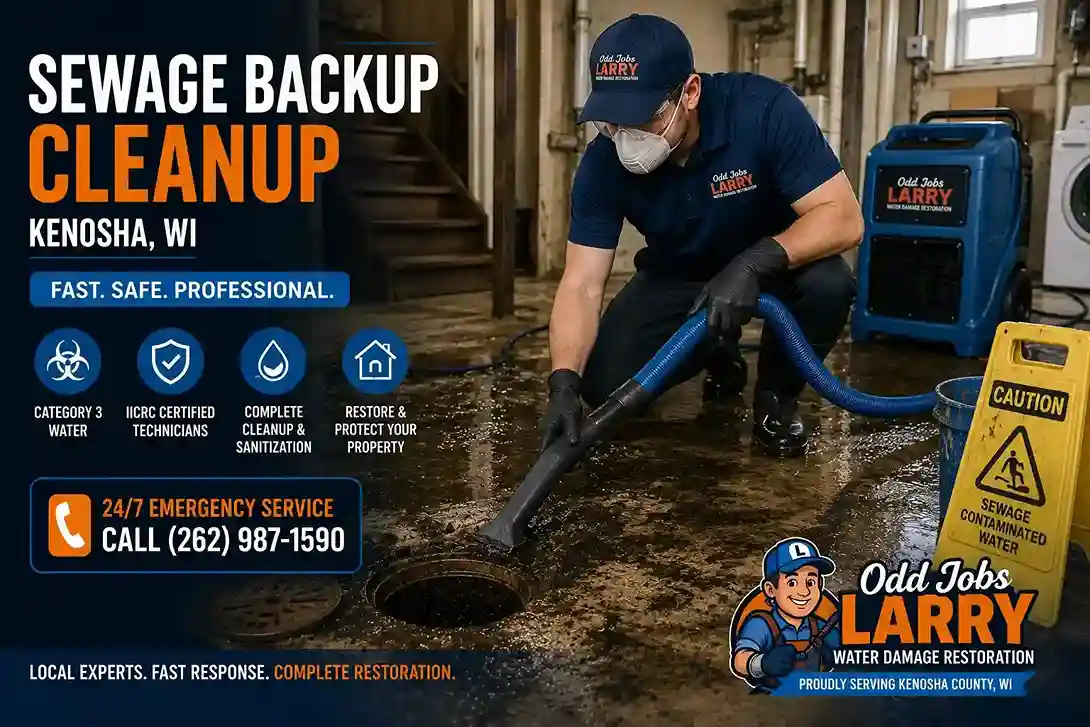
What Should You Do After a Sewage Backup?
If you experience a sewage backup, leave the contaminated area immediately and keep children and pets away. Avoid touching or walking through affected water, and turn off your HVAC system if it is safe to do so, to stop airborne contamination from spreading. Then call a professional sewage cleanup company right away. Sewage is classified as Category 3 black water under IICRC standards because it may contain bacteria, viruses, parasites, and other harmful contaminants.
- 1Leave contaminated areas immediately
- 2Keep children and pets away from the affected area
- 3Avoid touching contaminated materials or standing water
- 4Turn off HVAC if it is safe to do so
- 5Call a professional sewage cleanup company
Understanding Category 3 Water Damage
Every water damage job in Kenosha is classified by contamination level under the IICRC S500 standard. Sewage backups always fall into the most severe category.
Clean Water
Originates from a sanitary source such as a supply line or appliance. Poses little to no health risk if addressed quickly, but can escalate to a higher category over time.
Grey Water
Contains some contamination, such as water from a washing machine or dishwasher overflow. Can cause illness if ingested or if contact continues untreated.
Black Water
Grossly contaminated water from sewage backups, sewer laterals, or floodwater. Classified as a biohazard cleanup requiring containment, negative air filtration, and specialized removal procedures.
Common Causes of Sewage Backups in Kenosha Homes
Kenosha's older housing stock and lakefront storm patterns make basement sewer backup cleanup one of our most common emergency sewage removal calls. Heavy rainfall off Lake Michigan and spring thaw conditions regularly overwhelm municipal storm sewer systems, pushing wastewater back into basements through floor drains, and a simple toilet overflow cleanup can quickly turn into a full sewer backup cleanup job once contamination spreads.
- 🌧️Heavy Rainfall & Storm Sewer Overload: Intense Lake Michigan storms can overwhelm the municipal sewer system faster than it can drain.
- 🌳Tree Root Intrusion: Mature trees in older neighborhoods send roots into aging clay sewer laterals, causing blockages and backups.
- 🏚️Aging Sewer Lines: Kenosha's 1920s to 1970s housing stock often still runs on original clay or cast iron laterals prone to cracking and collapse.
- 🚿Basement Floor Drains: The lowest point of entry in a home, floor drains are typically the first place backed up sewage appears.
- 🏙️Municipal Sewer Backups: Capacity issues in the city's combined or aging sewer infrastructure can push wastewater into connected homes during peak flow events.
Serving All Kenosha Zip Codes
We respond to sewage backup calls throughout Kenosha County, including spring thaw and post-storm surges that hit older homes with aging sewer laterals hardest.
Why Sewage Cleanup Is a Serious Health Hazard
Category 3 water may contain pathogens capable of causing serious illness, which is why sewage cleanup is never a DIY project.
Materials Often Removed After a Sewage Backup
Porous materials exposed to Category 3 water often cannot be safely restored and must be removed as part of the cleanup process.
Carpet & Padding
Absorbs contamination quickly and cannot be sanitized to a safe standard.
Drywall
Wicks contaminated water upward, often requiring removal well above the visible waterline.
Insulation
Traps moisture and pathogens deep inside wall and floor cavities.
Upholstered Furniture
Fabric and cushioning absorb contamination that cannot be fully removed by cleaning.
Particle Board
Swells and breaks down when exposed to contaminated water, and cannot be sanitized.
Cardboard & Paper Goods
Highly porous and among the fastest materials to become unsalvageable.
Our Sewage Cleanup Process
A structured seven step process built around IICRC S500 standards, from first call to final restoration.
Emergency Response
A live technician dispatches a crew immediately and walks you through safety steps over the phone.
Containment Setup
Containment barriers and negative air machines isolate the affected area to stop cross contamination.
Category 3 Water Extraction
Standing black water is fully extracted using professional-grade equipment under strict PPE protocols.
Removal of Contaminated Materials
Porous materials that cannot be sanitized are removed and disposed of per biohazard guidelines.
Antimicrobial Treatment
Affected surfaces are treated with antimicrobial and disinfecting agents to neutralize remaining pathogens.
Structural Drying
Thermal imaging and moisture mapping guide placement of air movers and commercial dehumidifiers until readings confirm the structure is dry.
Restoration & Reconstruction
Removed drywall, flooring, and materials are rebuilt so the space is fully restored, with HEPA filtration used throughout the job.
Prevent Mold Growth After a Sewage Backup
Mold can begin colonizing within 24 to 48 hours of a sewage backup if moisture is not fully extracted. Hidden moisture behind walls, wet insulation, and subfloor contamination are the most common places mold takes hold after a Category 3 event, often long before it becomes visible.
Fast extraction and complete structural drying are the best defense. If mold has already started, our mold remediation after water damage service addresses colonized areas alongside your sewage cleanup.
Does Insurance Cover Sewage Backup Cleanup?
Sewage backup is commonly excluded from standard homeowners policies unless you carry a separate sewer backup endorsement. Because coverage varies by policy, documentation matters: moisture reports, photos, and category classification all strengthen your claim before your adjuster ever arrives.
We provide direct billing support and coordinate paperwork so you are not navigating the claims process alone.
Avoid Sewage Cleanup Scams
Sewage emergencies create urgency that some contractors exploit. Watch for waived deductible offers, which is an insurance fraud red flag, along with high-pressure contracts, large upfront deposits, and missing written estimates. A legitimate sewage cleanup company always provides a written scope of work before removing a single item.
Read our full guide on water damage restoration scams before signing anything.
Water Damage Guides for Kenosha Homeowners
Deeper answers to the questions homeowners ask most before and after a sewage backup.
Water Mitigation vs. Restoration
Understand the difference before you get a quote.
water mitigation vs restoration →The Water Damage Restoration Process
A full step-by-step breakdown of every phase.
water damage restoration process →Water Damage Categories Explained
Category 1, 2, and 3 water explained in detail.
water damage categories explained →How Long Does Restoration Take?
Realistic timelines for extraction, drying, and repairs.
how long does water damage restoration take →Signs of Hidden Water Damage
Bubbling paint, stains, and other warning signs to watch for.
signs of hidden water damage →Mold Growth Timeline After Water Damage
What happens in the first 24 to 48 hours and beyond.
mold growth timeline after water damage →How to Prevent Water Damage
Leak detectors, sump backups, and seasonal plumbing checks.
how to prevent water damage →Kenosha Local Water Damage Resources
Local flood data, neighborhood risk factors, and service area details for Kenosha homeowners.
Sewage Backup Cleanup Questions, Answered
What is Category 3 water?
Is sewage backup dangerous?
Can I clean sewage myself?
Does homeowners insurance cover sewage backup cleanup?
How long does sewage cleanup take?
What must be thrown away after a sewage backup?
Can sewage damage cause mold?
How much does sewage backup cleanup cost in Kenosha?
Sewage Backup? Don't Wait.
Live technicians answer 24/7, every day of the year, across Kenosha, WI.
📞 Call (262) 205-8618 Now