Frozen & Burst Pipe Water Damage Repair in Kenosha, WI
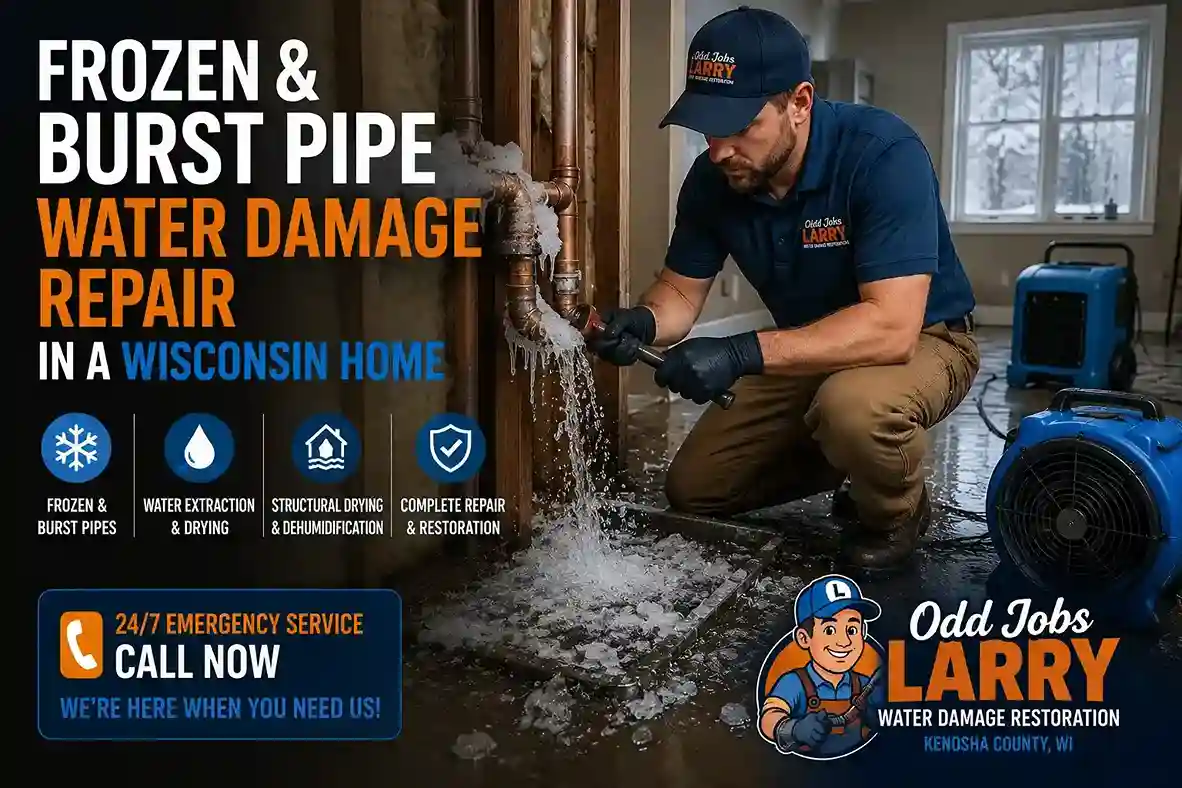
Wisconsin winters can turn a frozen pipe into a major flooding emergency. Our IICRC-certified team provides 24/7 water extraction, structural drying, mold prevention, and complete burst pipe water damage repair across Kenosha.
What Should You Do If a Pipe Freezes or Bursts?
If a pipe freezes or bursts in your Kenosha home, shut off your main water valve immediately, avoid contact with outlets or standing water near electrical hazards, and document the damage with photos before moving anything. Begin emergency water removal right away and call a restoration professional quickly, since burst pipes often cause the most damage when temperatures rise and frozen pipes begin thawing, releasing pressurized water into walls, floors, and ceilings.
- Shut off your main water supply
- Avoid electrical hazards near standing water
- Document the damage with photos
- Begin emergency water removal
- Call a water damage restoration company
Why Frozen Pipes Are Common in Kenosha Homes
Kenosha's Wisconsin winters bring long stretches of subfreezing temperatures off Lake Michigan, and much of the city's housing stock, built well before modern insulation standards, wasn't designed for today's energy codes. Drafty basements, uninsulated crawl spaces, and supply lines run through exterior walls all leave pipes exposed to cold air for hours at a time. Once water inside a pipe freezes, pressure builds behind the ice blockage, and the pipe can crack or split within hours; the actual flooding often doesn't show up until that frozen pipe begins to thaw and pressurized water starts pouring out behind drywall.
What Causes Frozen & Burst Pipes in Kenosha
Pipes located near exterior walls and in unheated areas of the home face the highest risk of freezing and bursting during a Wisconsin cold snap.
Poor Insulation
Pipes without adequate wrap in attics, crawl spaces, or exterior walls freeze fastest during sustained cold.
Unheated Basements
Older Kenosha basements without consistent heat leave supply lines exposed to near-freezing air.
Exterior Wall Plumbing
Lines routed through exterior walls sit closest to outdoor temperatures and freeze first.
Crawl Spaces
Vented, uninsulated crawl spaces are common in Kenosha's older homes and freeze quickly.
Garage Plumbing
Detached and attached garages rarely stay warm enough to protect exposed supply lines.
Power Outages During Winter
A lost furnace or heat source during a storm lets indoor temperatures drop fast enough to freeze pipes.
Signs a Pipe May Be Frozen or Burst
Catching a frozen pipe before it bursts, or catching a burst pipe before it causes major water damage, comes down to recognizing these signs early.
Our Burst Pipe Restoration Process
A consistent six-step process, using moisture mapping, thermal imaging, and industrial drying equipment, at every burst pipe water damage job in Kenosha.
Emergency Response
A live technician dispatches a crew to your Kenosha home 24/7.
Damage Assessment
Thermal imaging and moisture mapping identify the full extent of hidden water damage.
Water Extraction
Standing water is removed and containment protects unaffected rooms.
Structural Drying
Air movers and commercial dehumidifiers dry framing, subfloor, and wall cavities.
Sanitization
Affected surfaces are treated and moisture is monitored until readings confirm dry.
Restoration & Repairs
Drywall, flooring, and finishes are rebuilt to pre-loss condition.
Professional Water Damage Restoration After Burst Pipes
Every burst pipe job is classified and documented using IICRC S500 standards, the same framework insurance adjusters expect to see in a claim file.
Prevent Mold Growth After Pipe Damage
Mold can begin colonizing wet materials within 24-48 hours of water exposure, which is why fast extraction and drying after a burst pipe matters more than almost any other step in the process. Wet drywall, waterlogged insulation, and hidden moisture trapped inside wall cavities are the most common places mold takes hold after pipe damage, often before it's ever visible from the room itself.
We treat and monitor every burst pipe job with that 24-48 hour window in mind. For a closer look at how colonization progresses and how we stop it, see our guide to mold remediation after water damage.
Insurance Coverage for Burst Pipe Damage
Most homeowners insurance policies treat a burst pipe as sudden and accidental water damage, which is typically covered, unlike gradual leaks that develop over time. Getting a claim approved quickly comes down to documentation: clear photos, written moisture reports, and category classification from the moment our crew arrives. We coordinate directly with your adjuster and can provide direct billing using Xactimate estimating, so the scope of work matches what your insurer expects to see.
How to Prevent Frozen Pipes in Wisconsin
A few simple habits go a long way toward avoiding a frozen or burst pipe during a Kenosha cold snap.
- Insulate exposed pipes in basements, attics, and crawl spaces
- Apply heat tape to vulnerable supply lines
- Keep basements and crawl spaces heated through winter
- Open sink cabinets on exterior walls during severe cold
- Let faucets drip slightly during extreme cold snaps
- Know the location of your main water shutoff valve
Related Water Damage Resources in Kenosha
Related Emergency Services
Insurance & Trust
Educational Resources
Frozen & Burst Pipe Repair Questions, Answered
What causes pipes to burst in winter?Toggle answer
Water expands as it freezes, and the pressure that builds up behind an ice blockage inside a pipe can crack or split the pipe wall. This most often happens in poorly insulated areas like exterior walls, crawl spaces, unheated basements, and garages, where the pipe is exposed to prolonged subfreezing temperatures.
How quickly can a burst pipe flood a home?
A burst pipe can release hundreds of gallons of water in a matter of hours, especially if it goes unnoticed overnight or while a home is unoccupied. Water spreads quickly behind walls, under flooring, and into ceilings below, which is why shutting off the main water supply immediately is critical.
Does homeowners insurance cover burst pipe damage?
Most homeowners policies cover burst pipe damage because it's considered sudden and accidental, unlike a slow, gradual leak that may be excluded. Coverage details vary by policy, so we help document the damage thoroughly to support your claim either way. See our guide to insurance coverage for water damage for more detail.
How long does burst pipe water damage restoration take?
Most residential burst pipe jobs take 3-5 days to fully dry using industrial air movers and dehumidifiers before repairs begin. Larger jobs, or ones involving mold growth or structural repairs, can take longer. See our full breakdown at how long water damage restoration takes.
Can frozen pipes thaw without bursting?
Yes, a frozen pipe can thaw safely without bursting if the ice blockage clears before pressure builds enough to crack the pipe wall. However, many frozen pipes have already cracked while frozen and simply haven't leaked yet, so damage frequently appears only after thawing begins.
What are signs of hidden water damage after a pipe leak?
Bubbling or peeling paint, soft or discolored drywall, musty odors, and unexplained increases in your water bill can all indicate hidden water damage behind walls or under flooring. Our guide to signs of hidden water damage covers the full list.
How much does burst pipe cleanup cost in Kenosha?
Burst pipe cleanup costs depend on the water category, how far the water traveled, and whether structural materials need replacing, but most Kenosha jobs range from $1,000 to $8,000 or more. We provide a written scope of work before any work begins. See real ranges at cost of water damage restoration in Kenosha.
How can I prevent frozen pipes in Wisconsin?
Insulating exposed pipes, keeping basements and crawl spaces heated, opening cabinet doors on exterior-wall plumbing, and letting faucets drip during severe cold are all commonly recommended Wisconsin winter prevention measures. Knowing your main shutoff location also limits damage if a pipe does burst.
Frozen Pipe? Burst Pipe? We're On Our Way.
Live technicians answer 24/7, every day of the year, across Kenosha, WI.