Appliance Leak Water Damage Restoration in Kenosha, WI
A leaking water heater, washing machine, dishwasher, refrigerator line, or HVAC system can cause hidden water damage long before homeowners notice a problem. Our team provides emergency water extraction, structural drying, mold prevention, and complete restoration services throughout Kenosha County.
What Should You Do If an Appliance Starts Leaking?
Turn off the appliance if it's safe to reach, then shut off the water supply valve behind or beneath it to stop the flow. Remove standing water with towels or a wet vac, and photograph the damage before cleanup. Even small leaks can silently damage flooring, cabinets, drywall, and insulation, so contact a water damage restoration professional right away rather than waiting to see if it dries out on its own. Appliance leaks are one of the most common causes of residential water damage in Kenosha homes.
Appliances Most Likely to Cause Water Damage
Many appliance leaks begin slowly and stay hidden behind walls, cabinets, or utility areas for weeks or months before anyone notices. Here's what we see most often across Kenosha homes.
Water Heater Leaks
Tank failures, pressure relief valve issues, and loose fittings can release large volumes of water fast.
Washing Machine Leaks
Burst supply hoses, faulty pumps, and damaged door seals are a leading cause of laundry room flooding.
Dishwasher Leaks
Door seal failures, drain line problems, and clogged filters often damage cabinets before they're spotted.
Refrigerator Water Line Leaks
Ice maker lines and supply line fittings behind the fridge can leak slowly for months, unnoticed.
HVAC Condensate Leaks
Overflowing condensate drain pans and clogged lines quietly saturate ceilings, closets, and utility rooms.
Utility Sink & Plumbing Connections
Loose fittings and worn supply line connections around utility sinks are an easy leak source to overlook.
The Hidden Damage Appliance Leaks Can Cause
Appliance leaks rarely announce themselves. Hidden moisture works its way into wall cavities, subfloors, and insulation long before a stain or odor gives it away. Many homeowners don't discover an appliance leak until mold odors, staining, or flooring damage finally appears, and community reports frequently describe months-long hidden leaks that turned into extensive, expensive repairs.
Wet Drywall
Drywall wicks moisture upward and can stay saturated long after the surface looks dry.
Damaged Subfloors
Standing water under flooring causes subfloor damage that can compromise structural integrity over time.
Cabinet Deterioration
Kitchen and laundry cabinets swell, warp, and delaminate quickly when exposed to a slow leak.
Insulation Damage
Wet insulation loses its effectiveness and can trap wall cavity moisture against framing.
Mold Growth
Given the right conditions, mold colonization can begin within 24 to 48 hours of water exposure.
Electrical Hazards
Water reaching outlets, junction boxes, or wiring near an appliance creates a genuine safety risk.
Our technicians use moisture mapping and thermal imaging to trace secondary damage back to its source, confirming the full extent of structural drying needed before repairs begin.
Common Appliance Leak Problems in Kenosha Homes
Kenosha's older housing stock, largely built between the 1920s and 1970s, means original supply lines, fittings, and appliance connections are frequently decades past their intended service life. We see a consistent pattern of causes across the city:
- Aging appliances: Water heaters, washing machines, and dishwashers well past their expected lifespan are far more likely to develop tank, hose, or seal failures.
- Frozen supply lines: Wisconsin's hard winter cold snaps can freeze and crack supply lines feeding appliances in unheated utility areas.
- Hard water wear: Mineral buildup accelerates wear on valves, fittings, and internal components over time.
- Seasonal temperature changes: Freeze-thaw cycles stress fittings and connections repeatedly throughout a Kenosha winter and spring.
- Older housing stock: Original plumbing runs and appliance hookups in Kenosha's 1920s-1970s homes weren't built to modern standards.
- Improper maintenance: Supply hoses that are never inspected or replaced are one of the most common preventable causes of appliance leak water damage.
Our Water Damage Restoration Process
Every appliance leak call follows the same IICRC S500-based process, whether it's a slow refrigerator line drip or a full water heater tank failure.
Emergency Inspection
We assess the source and category of the leak using moisture meters and thermal imaging.
Water Source Control
The leaking appliance or supply line is shut off to stop further water intrusion.
Water Extraction
Standing water is removed with commercial extraction equipment.
Structural Drying
Commercial air movers and dehumidification equipment dry affected structures.
Sanitization
Antimicrobial treatment addresses contamination risk and helps prevent mold growth.
Repairs & Restoration
Damaged drywall, flooring, and cabinetry are repaired or replaced to complete the job.
Water Heater Leak Cleanup & Restoration
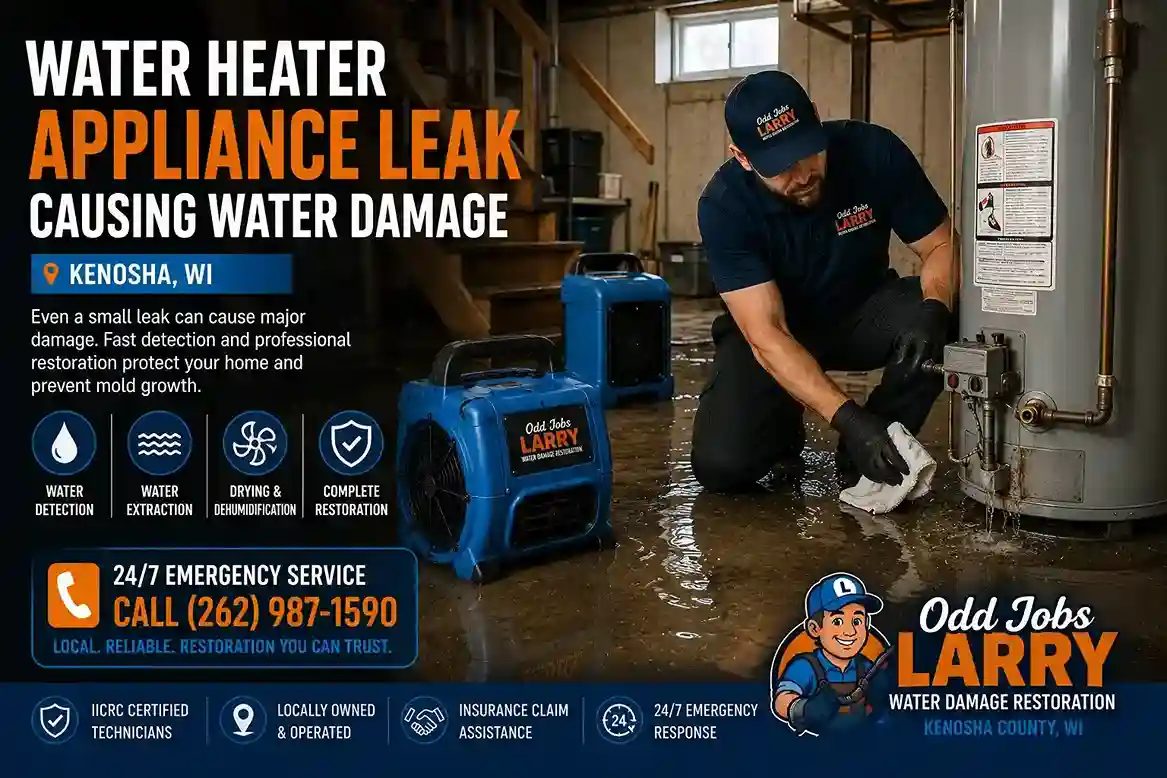
Water heaters can release a significant amount of water in a short time, and a full tank failure can quickly damage flooring, drywall, and personal property in a utility room or basement.
- Tank failures: Corroded or ruptured tanks can release 30 to 80 gallons of water at once.
- Pressure relief valve leaks: A faulty pressure relief valve can drip steadily for weeks before anyone notices.
- Rusted tanks: Internal corrosion weakens the tank wall over years until a slow leak becomes a sudden failure.
- Hidden utility room flooding: Utility rooms and basements are often the last place homeowners check, letting water heater leaks go undetected the longest.
Washing Machine Water Damage Repair
Washing machines pose a unique risk because they cycle high volumes of pressurized water through hoses that are easy to forget about until one fails.
- Supply hose failures: Rubber supply hoses degrade over time and can burst suddenly, releasing pressurized water fast.
- Drain hose leaks: A loose or disconnected drain hose can flood a laundry room during every cycle without anyone realizing it.
- Pump failures: A failing pump can leak steadily from the base of the machine.
- Laundry room flooding: Because laundry rooms often sit above finished space, an overflow can send water damage down into rooms below.
Dishwasher Leak Cleanup
Dishwasher leaks frequently damage cabinets and subfloors well before they become visible, since the leak point often sits low and hidden behind the appliance itself.
- Door seal failures: A worn door gasket lets water escape with every cycle, slowly soaking the surrounding cabinet base.
- Drain line problems: Clogs or disconnections in the drain line can send water backward instead of out.
- Overflow issues: A stuck float switch can let a dishwasher fill past its intended level and overflow onto the floor.
- Cabinet and flooring damage: The cabinets flanking a dishwasher are usually the first thing to show swelling, warping, or delamination.
Prevent Mold Growth After Appliance Leaks
Mold can begin colonizing within 24 to 48 hours of water exposure, which is why fast extraction and drying matters more than almost anything else after an appliance leak. Hidden wall moisture, wet cabinetry, and contaminated insulation all create the conditions mold needs to establish and spread.
⚠️ Don't Wait to Find Out
If an appliance has been leaking for more than a day or two, assume moisture has reached materials you can't see. A professional moisture inspection is the only reliable way to confirm the true extent of the damage.
If you're seeing signs of mold after a leak, our detailed guide on mold remediation after water damage walks through the full remediation process.
Does Insurance Cover Appliance Leak Water Damage?
Sudden, accidental leaks, like a burst washing machine supply hose or a water heater tank failure, are typically covered by standard homeowners insurance. Long-term, neglected leaks that a homeowner reasonably should have caught earlier may not be, since insurers generally distinguish between sudden accidental damage and gradual, preventable damage.
We document every job with detailed moisture reports, photos, and category classification, and we offer direct billing and adjuster coordination so your claim has the evidence it needs from the first call.
Does insurance cover water damage?
A full breakdown of what's typically covered and what isn't.
Insurance claim checklist for water damage
What to document before your adjuster arrives.
Cost of water damage restoration in Kenosha
Real price ranges and what drives them.
Should I use my insurer's preferred vendor?
What to know before you decide.
How to Prevent Appliance Leak Water Damage
Homeowners frequently tell us they wish they'd installed a leak detector before their first costly hidden leak, not after. A few simple habits go a long way toward preventing appliance leak water damage altogether.
- Replace washing machine supply hoses every 3 to 5 years, even if they look fine
- Install water alarms near water heaters, washing machines, and dishwashers
- Consider a smart leak detector with automatic shutoff for whole-home protection
- Schedule routine appliance inspections, especially for older units
- Keep up with basic appliance maintenance, including seals and filters
- Install automatic shutoff systems on major water lines where possible
Other Water Damage Services We Provide
Sump Pump Failure
Basement flooding from spring-thaw or heavy-rain sump failures.
sump pump failure cleanup →Storm & Flood Damage
Lake Michigan-driven storm and flood restoration.
storm flood damage restoration →Water Extraction & Structural Drying
Commercial extraction and industrial drying equipment.
water extraction services →Roof & Ceiling Leak Damage
Older Kenosha roofing and ceiling leak restoration.
roof and ceiling leak repair →Commercial Water Damage
Restoration for downtown Kenosha businesses.
commercial water damage restoration →Content Pack-Out & Restoration
Saving and storing belongings during the drying process.
content pack-out restoration →Water Damage Guides for Kenosha Homeowners
Kenosha Water Damage Resources
Appliance Leak Water Damage Questions, Answered
What causes appliance leaks?+
Appliance leaks are most often caused by aging supply hoses, worn door seals, corroded tanks, clogged drain lines, or loose fittings. In Kenosha, older housing stock and hard water wear make these failures more common than in newer homes.
Can a leaking water heater damage my home?+
Yes. A full tank failure can release 30 to 80 gallons of water quickly, and even a slow pressure relief valve leak can cause serious hidden damage over weeks or months in a utility room or basement.
Does homeowners insurance cover appliance leak damage?+
Sudden, accidental leaks like a burst supply hose are typically covered. Gradual leaks that went unnoticed or unaddressed for a long period may be treated differently by your insurer. We help document your specific situation for a claim either way.
How quickly can mold grow after a leak?
Mold can begin colonizing within 24 to 48 hours of water exposure, which is why fast water extraction and structural drying are critical after any appliance leak.
Can a dishwasher leak damage subfloors?
Yes. Dishwasher leaks frequently damage cabinets and subfloors well before they become visible, since the leak point is low and hidden behind the appliance itself.
How much does appliance leak water damage restoration cost?
Most residential jobs in Kenosha run $1,000 to $8,000 or more, depending on the water category, how much square footage is affected, and whether structural materials need replacing. We provide a written estimate before any work begins.
What are signs of hidden water damage?
Watch for musty odors, discoloration or staining on walls and ceilings, warped or soft flooring, peeling paint, and swollen cabinetry near appliances. Any of these can indicate hidden moisture behind walls or under flooring.
Should I replace appliance supply hoses?
Yes. We recommend replacing washing machine and dishwasher supply hoses every 3 to 5 years, even if they show no visible signs of wear, since rubber hoses degrade internally over time and can fail suddenly.
Appliance Leak Water Damage Doesn't Wait. Neither Do We.
Live technicians answer 24/7, every day of the year, across Kenosha, WI. Emergency water extraction, structural drying, mold prevention, and complete appliance leak restoration.
📞 Call (262) 205-8618 NowOdd Jobs Larry · 4216 52nd St, Kenosha, WI 53144 · Open 24/7